Last updated October 30, 2026
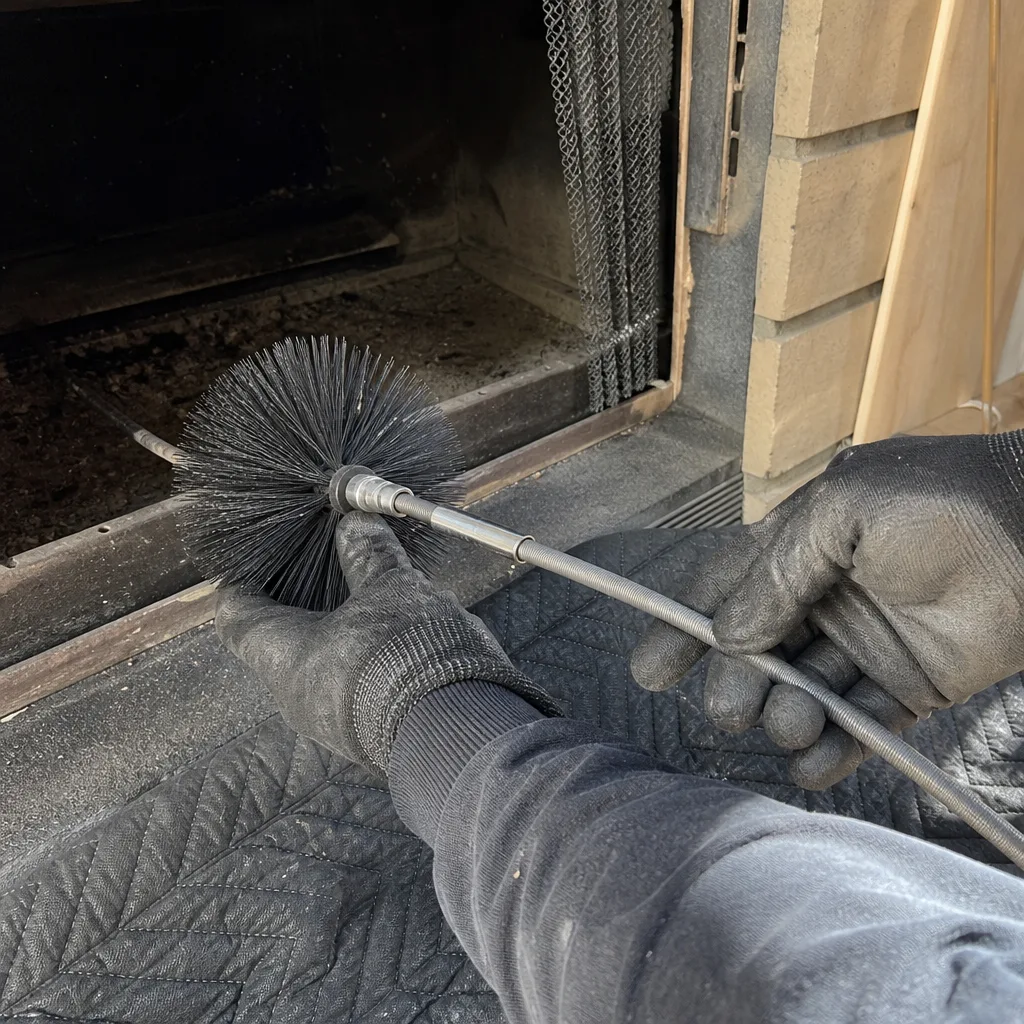
 Sweep & inspection
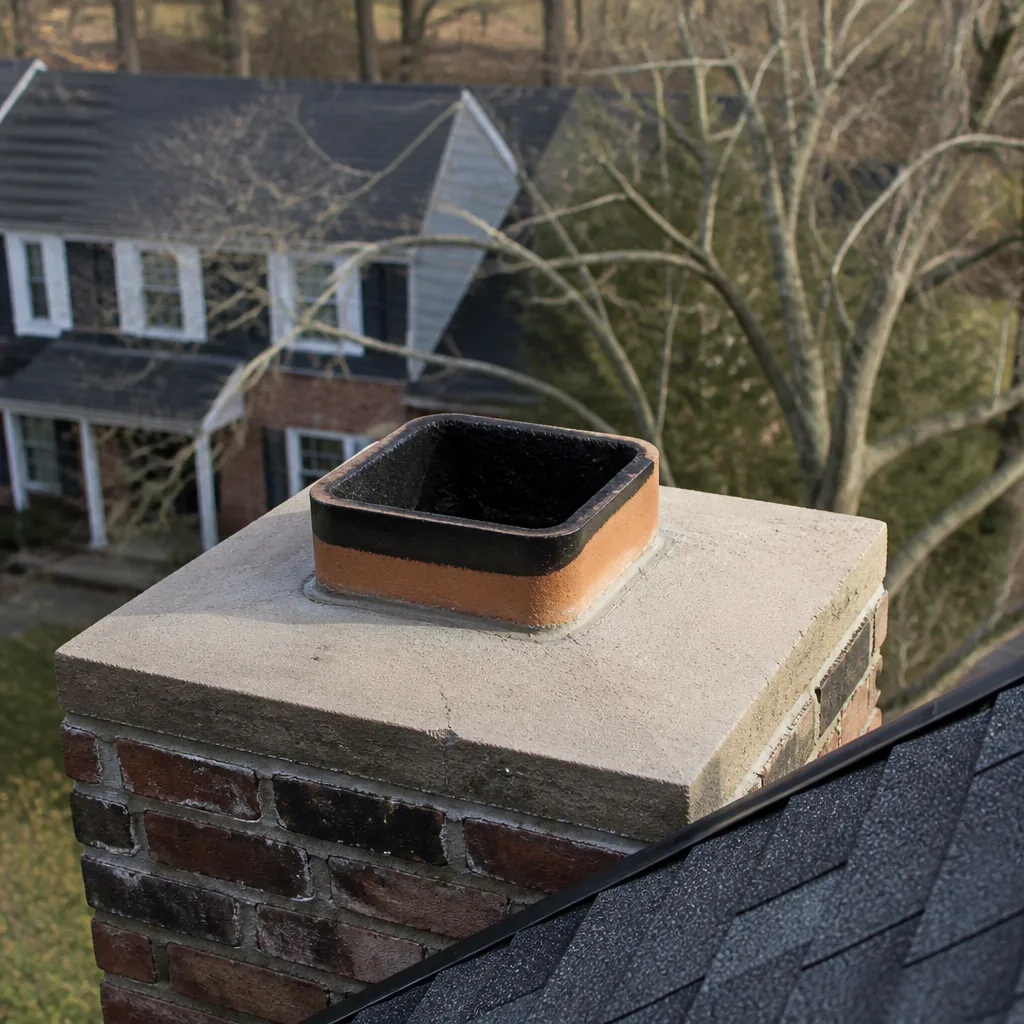
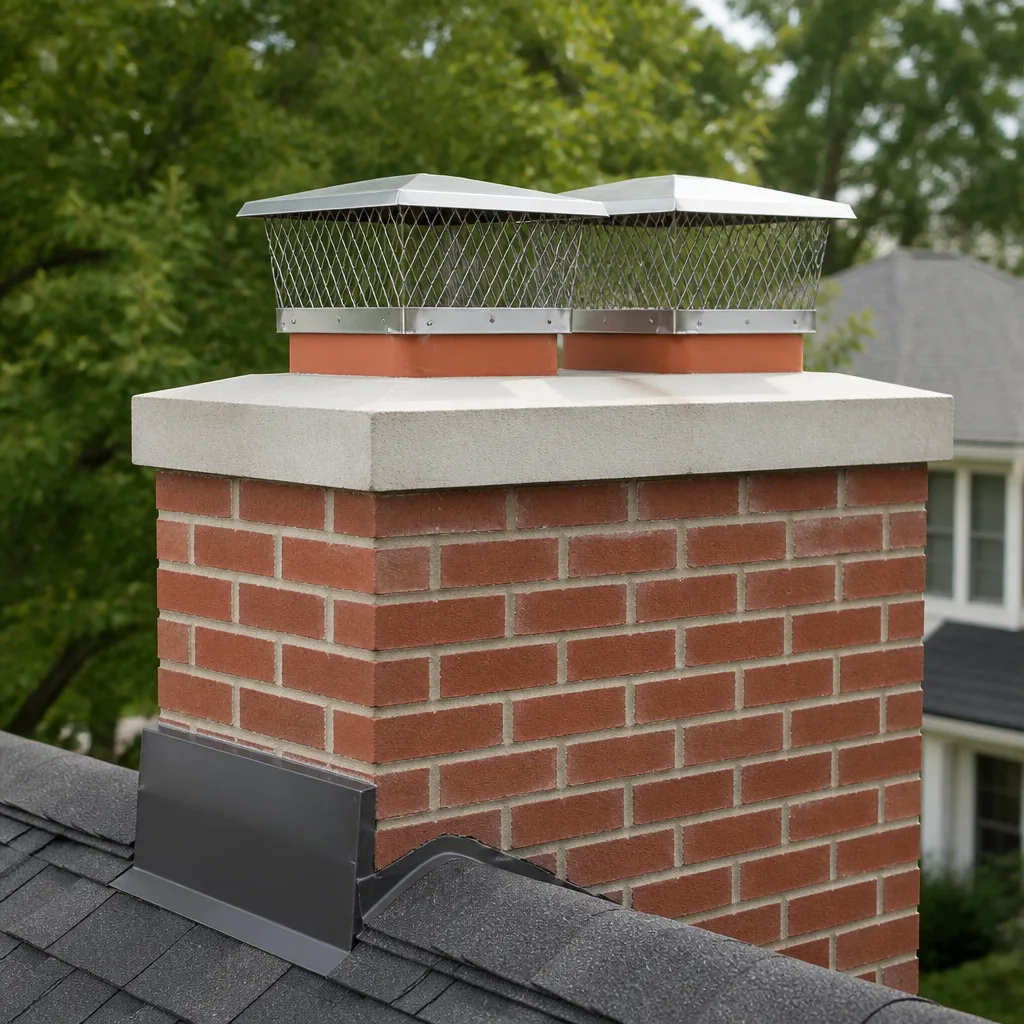 Caps & crowns
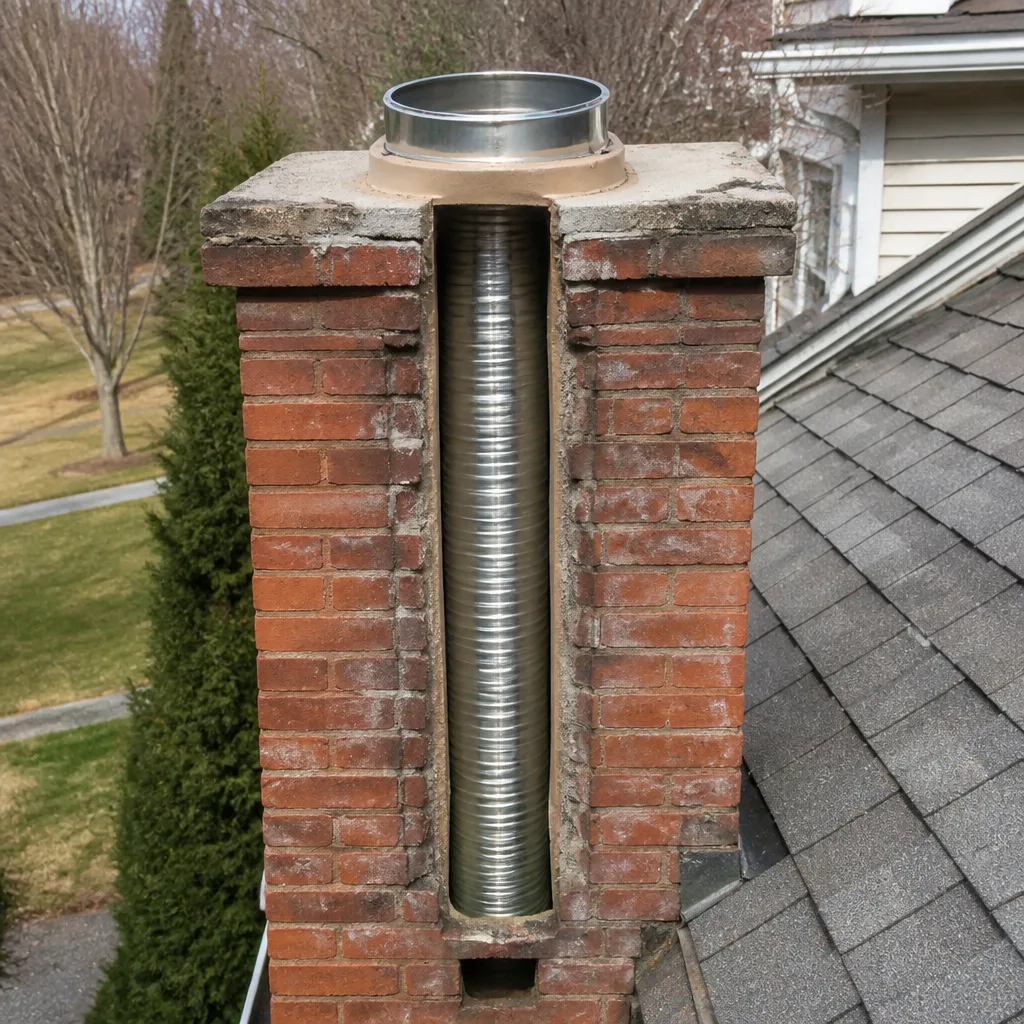 Flue relining
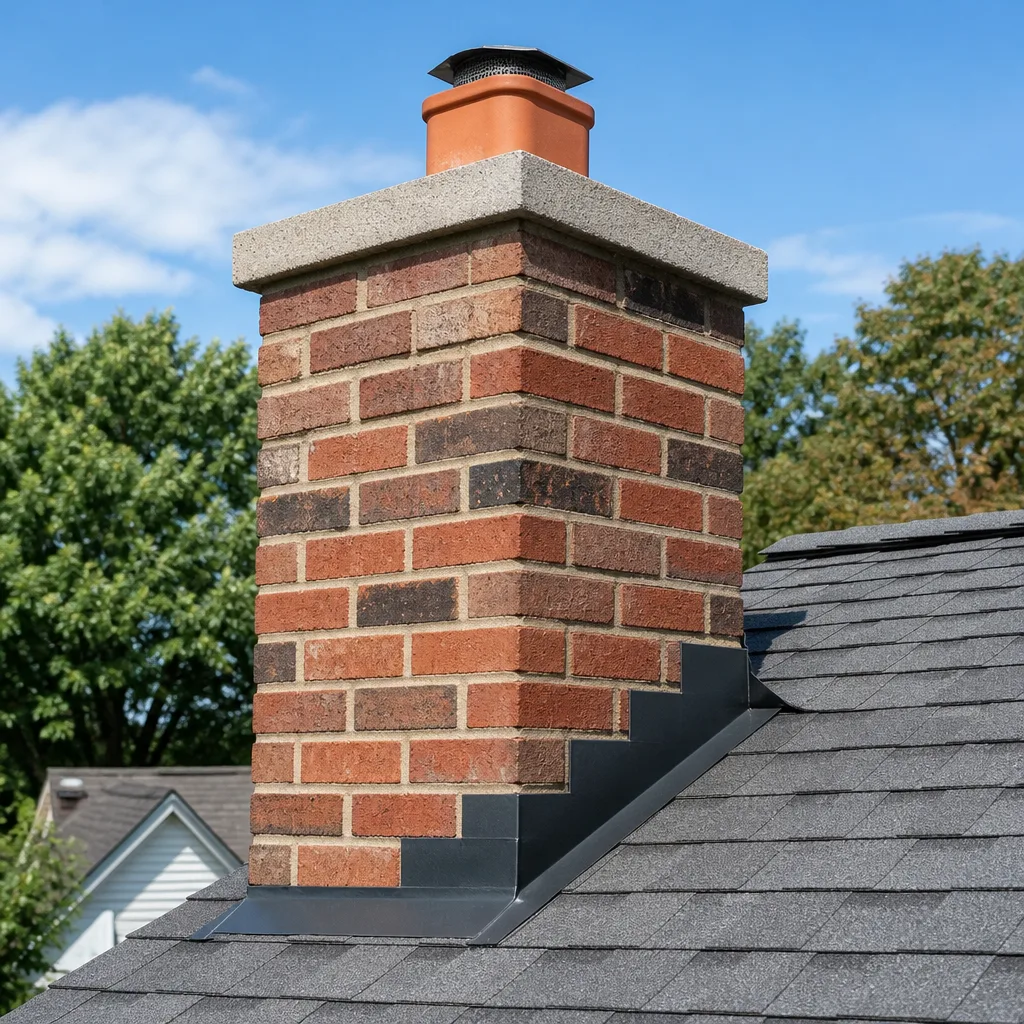 Masonry repair
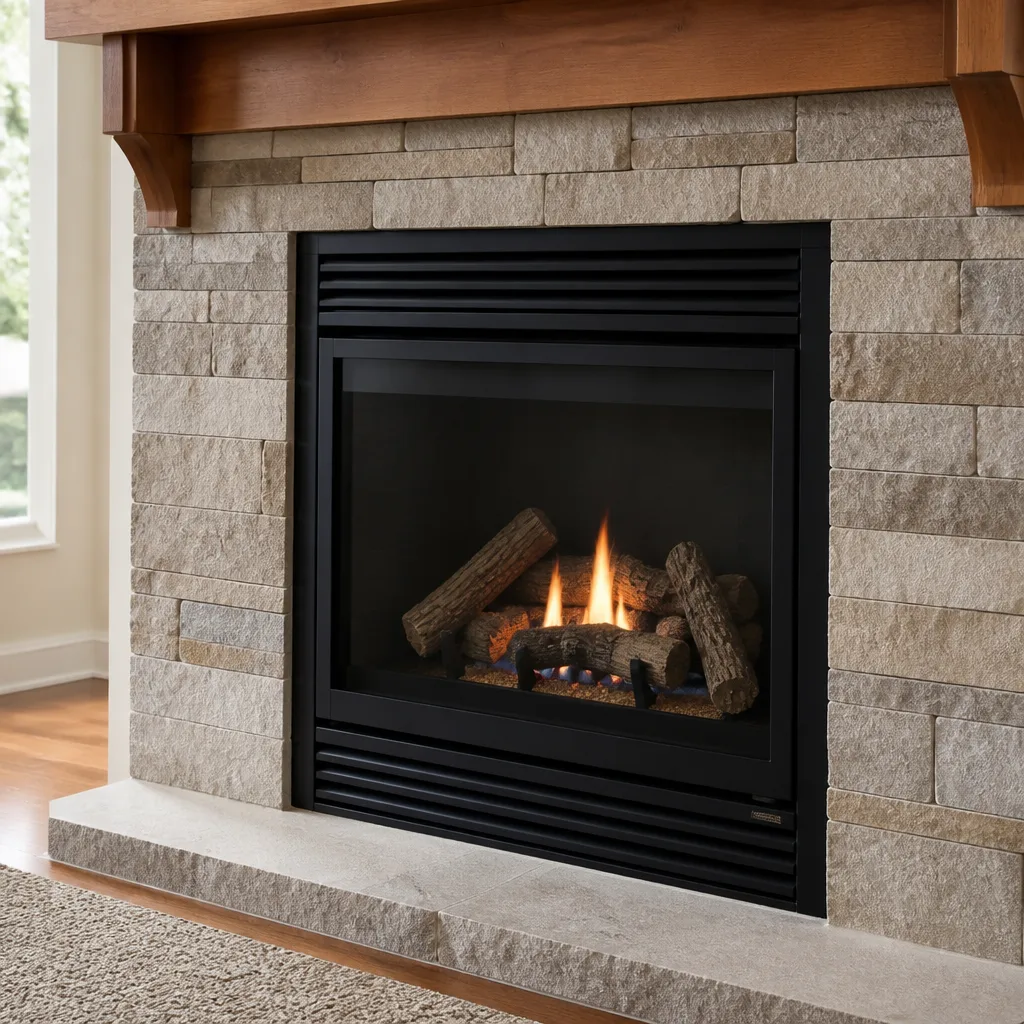 Gas fireplace service
Level 1 sweep and inspection to the NFPA 211 annual standard - flue, crown, cap, and flashing checked and photographed
Chimney sweep logs do not sweep chimneys. They loosen some creosote - which then falls where a brush and vacuum still have to collect it.
The Complete Chimney Sweep Guide for El Cajon Homeowners
Most chimney sweep guides read like they were written for a house in Vermont. Hardwood fires burning nonstop from October through March, sub-zero temperatures, and ice dams forming on the cap. That’s not how El Cajon works. Our inland climate produces a different kind of creosote, a different burning schedule, and a different set of wind-driven problems that most generic advice never mentions. This guide walks through what a proper chimney sweep actually covers here, why our Santa Ana season matters to your flue, and what you can expect from a full-system inspection on a El Cajon home.
Styles & brands we work with
Quick Answer
A chimney sweep in El Cajon should include a full inspection of the flue liner, smoke chamber, firebox, damper, and cap, followed by mechanical brushing to remove creosote and debris. Cost typically runs $180 to $340 for a standard sweep, with same-week scheduling available through Acorn Chimney Sweep in El Cajon. Because our region’s intermittent burning pattern creates a hard, glazed creosote layer rather than the fluffy soot common in cold-climate homes, a dry brush alone often isn’t enough if the chimney hasn’t been serviced in several years.
Table of Contents
- The El Cajon Chimney Reality Most Guides Ignore
- Anatomy of a Full-System Sweep
- Creosote and the Intermittent Burn Problem
- Santa Ana Winds and Your Flue
- Masonry vs. Prefab Fireplaces: Different Tools, Different Sweeps
- What a Sweep Reveals: Liners, Caps, and Dampers
- Dryer Vents: The Other Problem in Your Walls
- Common Mistakes to Avoid
- When to Call a Professional
- Frequently Asked Questions
- The Bottom Line
The El Cajon Chimney Reality Most Guides Ignore
El Cajon sits in a valley that gets hot. Real hot. July and August push past 90 degrees most days, and the humidity hovers low enough that wood dries out fast. That matters to your chimney in ways most national guides never address. The firewood you buy in El Cajon burns differently than the same species would in a humid coastal climate. It’s drier, which sounds like a good thing, but dry wood at high temperature can produce a finer, harder particulate that binds to flue walls as a dense glaze rather than loose ash. We see this pattern in chimneys across the city, from Fletcher Hills to Rancho San Diego, and it changes how we approach even a routine sweep.
There’s also the question of how often you burn. El Cajon winters are mild enough that most homeowners run their fireplace a few nights a week in December and January, then shut it down for months. That intermittent pattern creates an environment where creosote layers build up in thin, hard strata rather than thick, flaky deposits. Each burn cycle heats the flue, deposits residue, then the flue cools and the residue hardens. The next burn reheats it, adding another layer. Over a season or two, you end up with a dense, stubborn buildup that a quick brush-over won’t remove. This is why a proper El Cajon chimney sweep is more involved than what a $99 special from a flyer promises.
What you should take away from this section is simple: your chimney isn’t facing the same conditions as a house in New England, and treating it like one means leaving material in the flue that a regional sweep would have addressed. That’s the core problem this guide exists to solve.
Anatomy of a Full-System Sweep
A real chimney sweep is not just running a brush up and down the flue. Here’s what a full-system service includes when you hire a professional in El Cajon, and why each step matters to the others.
- Flue inspection and brushing. The sweep evaluates the liner material, whether clay tile or stainless steel, and selects a brush matched to that surface. Brushing removes the bulk of creosote and any bird or rodent debris. If the liner already has damage, brushing can worsen it, which is why inspection comes first, not after.
- Smoke chamber cleaning. The area above the firebox narrows before connecting to the flue. This is where turbulence deposits creosote in quantities that sometimes exceed the flue liner itself. A brush on a rod can’t reach all of it. It takes angled tools and patience.
- Firebox clearing. The firebox holds the grate, andirons, and the floor where ash and embers collect. A full sweep clears this space so the sweep can visually inspect firebrick, mortar joints, and any cracks that may need chimney repair in El Cajon.
- Damper check. The damper is the movable plate that seals the flue when the fireplace isn’t in use. A warped, rusted, or stuck damper lets conditioned air escape in summer and can prevent proper draw during a fire. It gets cleaned, lubricated, and inspected during a sweep.
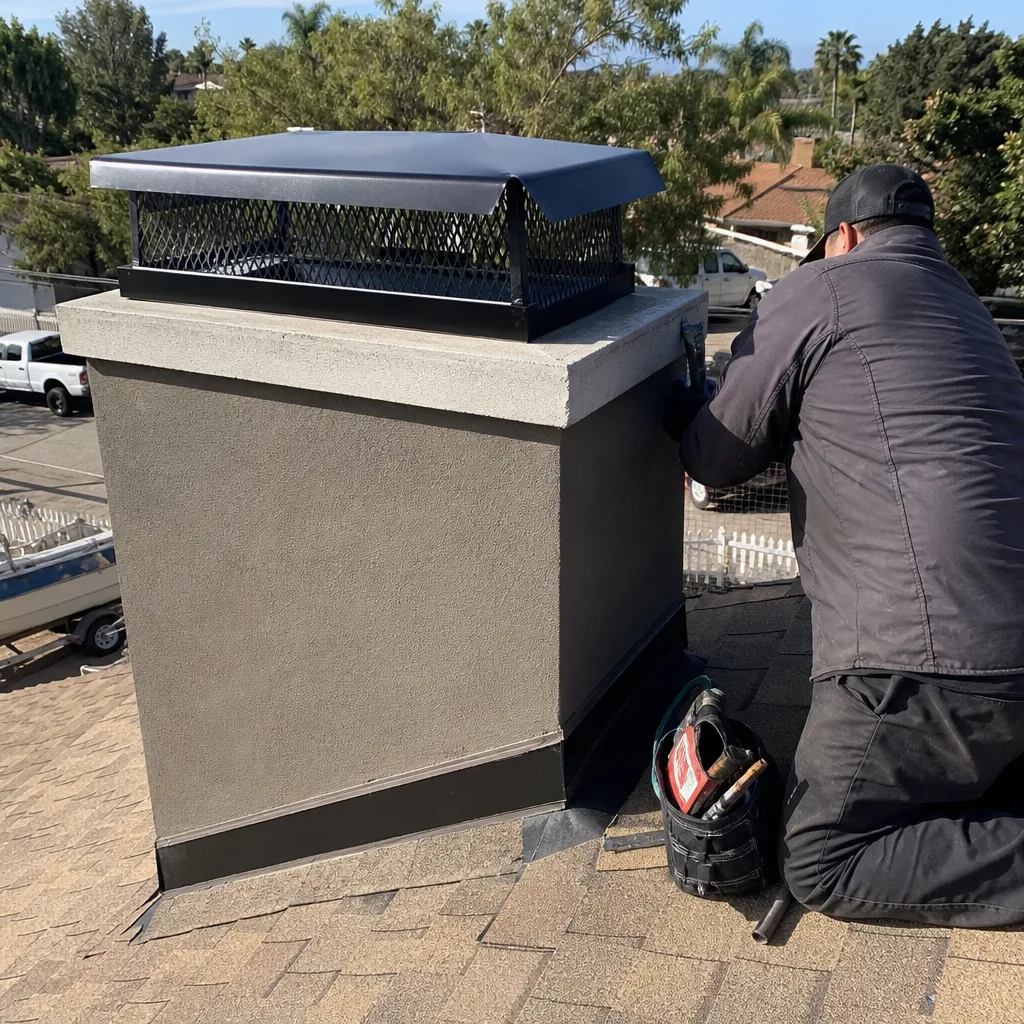
- Chimney cap inspection. The cap is your first defense against rain, animals, and embers. In El Cajon, where dried vegetation and Santa Ana winds push debris against the cap from every angle, this component fails faster than most homeowners expect. A sweep checks for rust-through, missing screens, and blockages around the cap’s spark arrestor.
- Full report with photos. You should leave every sweep with visual documentation of what was found. If the sweep recommends additional work, that recommendation should come with images you can see for yourself. We use camera inspection on every job so the evidence is in your hands, not just our word.
Each of these steps depends on the one before it. Skip the smoke chamber and you leave a creosote reservoir that re-coats a cleaned flue. Skip the cap and you let water keep entering the system. A sweep that only does step one is half a service, and in our experience it’s the most common reason El Cajon homeowners end up needing repairs sooner than they should.
Creosote and the Intermittent Burn Problem
Creosote is the byproduct of incomplete wood combustion. When smoke cools as it rises through the flue, the unburned compounds condense on the liner walls. The more stop-and-start your burning pattern, the more cooling cycles your flue experiences, and the more opportunity creosote has to form in that dense, adherent form we mentioned earlier. In El Cajon, where most fireplaces get used for a few hours at a time on cool evenings, this condensation pattern is the rule, not the exception.
There are three grades of creosote, and knowing which one is in your flue matters to how the sweep approaches it:
- Stage one: Flaky, dusty, and dark brown. This responds well to standard brushing and is what you’d expect in a flue that’s swept annually.
- Stage two: Harder, granular, and shiny in patches. It requires more aggressive brushing and sometimes chemical treatment to break the bond with the liner. This is common in El Cajon chimneys that go two or three seasons between cleanings.
- Stage three: Glazed and tar-like. This is a hardened, concentrated fuel layer that can burn hot enough to crack a clay liner. Once creosote reaches this stage, brushing alone is often ineffective. The flue may require chemical removal agents or, in severe cases, a liner reline consideration.
Acorn Chimney Sweep home services in El Cajon regularly encounter stage two and stage three creosote simply because our burning patterns are intermittent. A homeowner who burns 20 nights a year for four years can have a worse creosote problem than a Vermont family that burns daily all winter. It’s counterintuitive, but it’s the reality of our climate.
Santa Ana Winds and Your Flue
Santa Ana winds are a fact of life in El Cajon from September through February. They push dry air from the high desert toward the coast, often at sustained speeds that rearrange patio furniture and strip eucalyptus branches. They also do something specific to chimneys that most people don’t think about until a problem shows up.
When Santa Ana winds blow across a chimney cap, they create a venturi effect at the flue opening. This can pull air down the chimney rather than letting it draft upward. That downdraft carries dust, pollen, and whatever debris is suspended in the air straight into your flue. If there’s already a creosote layer on the liner, that dust bonds to it, creating a gritty, abrasive coating that accelerates the next period of buildup. We’ve opened dampers in El Cajon homes after a wind event and found a fine layer of grit settled across the smoke shelf, some of it not from the homeowner’s own fires at all.
There’s also the ember concern. A chimney cap with a damaged spark arrestor screen during Santa Ana conditions isn’t just letting material in. It’s also allowing hot embers out, into a region where dried brush and wind are a serious fire concern. A proper cap installation, sized to the flue and anchored for high-wind exposure, is a core part of what we check on every El Cajon sweep. Materials from Gelco and Famco are what we use for cap replacements because they’re built for this kind of sustained wind load, which is not something a universal cap from a big-box store is rated for.
The practical guidance here is straightforward: if your chimney hasn’t been inspected before or after a heavy Santa Ana season, the odds are good that something has entered or moved in ways you can’t see from the ground. A sweep that includes a cap and damper check will catch it before your first burn of the season sends the wrong kind of smoke back into the room.
Masonry vs. Prefab Fireplaces: Different Tools, Different Sweeps
El Cajon has a mix of housing stock. Older homes in the downtown corridor and parts of Fletcher Hills are more likely to have traditional masonry chimneys built from brick or block with a clay tile liner. Tract developments from the 1980s through early 2000s, including much of Rancho San Diego and surrounding subdivisions, lean heavily on prefabricated zero-clearance fireplaces with stainless steel flue liners. These two systems require different tools, different approaches, and different levels of care.
Masonry chimneys get swept with wire or poly brushes sized to the tile dimensions. The sweep works from the roof in most cases, running rods down through the flue while a vacuum stays at the firebox end. Clay tile liners are durable but prone to cracking under thermal stress, especially when stage three creosote has built up over several seasons. A masonry chimney in El Cajon that has never had a liner inspection may have hidden damage that a brush alone won’t reveal.
Prefab fireplaces require a softer touch. The stainless steel liner has a thinner wall than clay tile, and using a wire brush on it can scratch the surface and shorten its lifespan. Poly brushes are the standard here. The sweep also needs to know the manufacturer’s clearance requirements and the condition of the chase, which is the framed enclosure that houses the prefab unit. If water has been getting in through a failed cap or chase cover, the metal components inside may be rusting even though the fireplace still works fine from the outside.
This is where the value of a specialist shows up. A one-size-fits-all sweep with a single brush type and a roof-only approach can’t properly service both systems. And in El Cajon, it’s common for a single street to have masonry chimneys on one side and prefab units on the other. The sweep needs to know which system they’re looking at before they touch it, or the cleaning itself becomes the problem.
What a Sweep Reveals: Liners, Caps, and Dampers
One thing we hear from El Cajon homeowners all the time is that they hired a sweep, got told their chimney needed thousands of dollars in repairs, and had no way to verify any of it. That’s a legitimate concern, and it’s one of the main reasons a camera inspection should be part of every sweep you pay for. You should never be asked to take a verbal claim about the inside of your flue at face value when a camera can show you exactly what’s there.
Here’s what a sweep can actually reveal about the three components most likely to need attention:
- Flue liner damage. Cracks, spalling, or gaps in a clay liner are visible on camera. They mean combustion gases can now reach combustible materials around the chimney. In some cases, a liner resurfacing system like HeatShield can restore the damaged section without removing the old liner. In more advanced cases, a full reline with a DuraFlex flexible liner is the structural fix. Both are professional-grade solutions that a full-system sweep company can perform on the same visit.
- Chimney cap failure. Rusted caps, torn screens, or caps that have come loose from the crown all show up clearly in a roof-level inspection. In El Cajon’s wind and heat, cap replacement is one of the most frequent repair items we handle. A cap from Olympia Chimney or Gelco is sized to the flue and installed to withstand the wind loads we experience every fall.
- Damper malfunction. Dampers rust, warp, or simply get stuck over years of heating and cooling cycles. A damper that won’t fully close is a constant draft in summer air-conditioning season, which matters in El Cajon when summer cooling bills are already high. A sweep can tell you if the damper is repairable or if a replacement is needed.
The key principle is evidence. A sweep that recommends a liner repair or cap replacement should be able to show you exactly why, with images you can hold onto. We don’t recommend work that can’t be documented, and we say plainly when a chimney can safely wait another season.
Dryer Vents: The Other Problem in Your Walls
While we’re on the subject of full-system thinking, your dryer vent is functionally a secondary chimney. It moves hot, moist air and lint out of your home every time you run a load. And in El Cajon’s dry climate, lint behaves a little differently than it does in humid coastal areas. It’s lighter, finer, and more easily lofted into the airstream inside the vent, where it deposits on every bend and transition rather than settling at the bottom like a wet clump.
The result is that dryer vents in El Cajon homes can develop a thick coating along the entire length of the run, not just at the exterior cap. That coating is combustible. It’s one of the leading causes of residential structure fires nationwide, and it’s a problem most chimney sweep companies never address because they only work above the roofline. A dryer vent cleaning in El Cajon should be part of the same service call as a chimney sweep, not a separate appointment with a different company.
What a proper dryer vent cleaning involves: disconnecting the vent from the dryer, running a rotating brush through the full length of the duct, removing the accumulated lint from both ends, and then verifying airflow with the dryer running. The technician should also check the exterior termination for a functioning damper that prevents backdraft. In Santa Ana conditions, a missing or stuck-open damper on a dryer vent pulls dust and debris into the duct, adding to the lint load. The whole service takes well under an hour, and it should be done at least annually for a household that runs three or more loads a week.
Common Mistakes to Avoid
- Hiring a sweep who never gets on the roof. If the technician doesn’t inspect the cap and crown from above, they’re missing the part of the system most exposed to El Cajon weather. A from-the-bottom sweep is incomplete by definition.
- Skipping the smoke chamber. This area above the firebox holds more creosote than most homeowners realize. A sweep that only brushes the main flue leaves the smoke chamber as a standing fuel source that re-contaminates the liner.
- Ignoring the dryer vent because it’s “not a chimney.” Lint fires don’t care about terminology. In a El Cajon home with a long vertical dryer run or multiple bends, annual cleaning is not optional.
- Using a generic cap from a home center. A universal cap that clamps loosely onto an existing flue tile won’t hold up in Santa Ana winds. You need a cap sized to your specific flue and anchored properly, which is why we source caps from Gelco and Olympia Chimney rather than off-the-shelf substitutes.
- Waiting until the first cold night to book a sweep. El Cajon’s peak burning season is short. Once December hits, every reputable sweep in the county is booked out. The right time to service a chimney in El Cajon is September or October, before the wind and burn season overlap.
- Falling for the $79 special. A sweep priced below the cost of the labor involved is a loss leader designed to generate expensive “repair” recommendations. You’ll pay either way. You’d rather pay for honest work up front than manufactured urgency later.
- Skipping an inspection because you “barely use” the fireplace. Infrequent use in a dry, windy climate creates hard creosote and debris accumulation that a single burn can ignite. The lower the use, the more important the inspection.
When to Call a Professional
Some tasks around the house are genuinely fine to handle yourself. A chimney sweep isn’t one of them. The tools, the roof access, the creosote dust, and the visual inspection that tells you whether a flue is safe to burn all require a trained technician. If you notice any of these signs, call before your next fire: a smell of smoke in the house when the fireplace isn’t in use, visible soot falling into the firebox, a damper that won’t open or close, water staining on the ceiling near the chimney, or a chimney that hasn’t been swept in more than two years.
Acorn Chimney Sweep offers free estimates in El Cajon. Call (844) 510-0293 and we’ll schedule a sweep and full-system inspection at a time that works for you.
Frequently Asked Questions
A standard chimney sweep in El Cajon runs $180 to $340 depending on the chimney type, height, and current condition. Prefab systems tend to be at the lower end, while masonry chimneys with heavy creosote or accessibility issues run higher. Any quote you receive should include the full-system sweep we described above, not just a flue brushing. They’ll give you an exact price before any work starts, and you can call (844) 510-0293 for a free estimate.
Annual inspection is the baseline, with sweeping done as needed based on what the inspection finds. In El Cajon, where burning is intermittent and creosote forms in hard, dense layers, most homeowners should expect a sweep every year or two at minimum. If you burn more than two cords of wood in a season, sweep before the next season regardless. If you also use a dryer regularly, the dryer vent should be cleaned at least annually alongside the chimney.
Not necessarily, but the only way to know is with a camera inspection. Clay liners crack over time from thermal cycling, and a crack that doesn’t affect your fireplace’s performance today can still be a serious fire hazard. If a sweep recommends a liner repair, ask for video documentation. If damage is confirmed, systems like HeatShield can resurface the damaged section without a full liner replacement, and DuraFlex relining is a permanent structural fix when the old liner is beyond saving.
Hard, glazed creosote requires chemical treatment or specialized mechanical tools to break its bond with the liner. The approach depends on the stage of creosote and the liner material. This is one of the reasons a El Cajon sweep can’t just be “brushed more.” The right chemicals and tools differ for clay tile versus stainless steel, and using the wrong combination damages the liner. A professional will assess the creosote stage and choose accordingly.
Yes. Lint accumulation inside a dryer vent is one of the leading causes of residential fires in the United States. In El Cajon’s dry air, lint redistributes along the entire vent run instead of settling at the cap, which means a clog can form anywhere between your dryer and the exterior wall. A dryer vent cleaning should be part of your annual home maintenance routine, and it takes less than an hour.
Yes, if you hire a full-system company. A sweep-only contractor will leave you with a list of issues and a referral to someone else. Acorn Chimney Sweep’s repair services handle liner resurfacing, cap replacement, damper swaps, and masonry repairs during the same appointment whenever possible. That’s the difference between a company that cleans and a company that maintains the whole system. Call (844) 510-0293 to discuss what your chimney needs.
The Bottom Line
A proper chimney sweep in El Cajon is a full-system service, not a brush through the flue. The climate here creates hard, dense creosote through intermittent burning, and the Santa Ana season pushes debris and downdraft soot into chimneys that then sit unused for months. Your chimney needs annual inspection, the same way your roof does, and the dryer vent is equally important to maintain. The right sweep leaves you with visual evidence of your chimney’s condition and a clear answer about what needs work now and what can wait. Schedule your El Cajon chimney sweep before the burn season starts, and you’ll have a fireplace that’s ready the first night you want it. Call (844) 510-0293 for a free estimate.
Written by the team at Acorn Chimney Sweep, serving El Cajon since 2015.
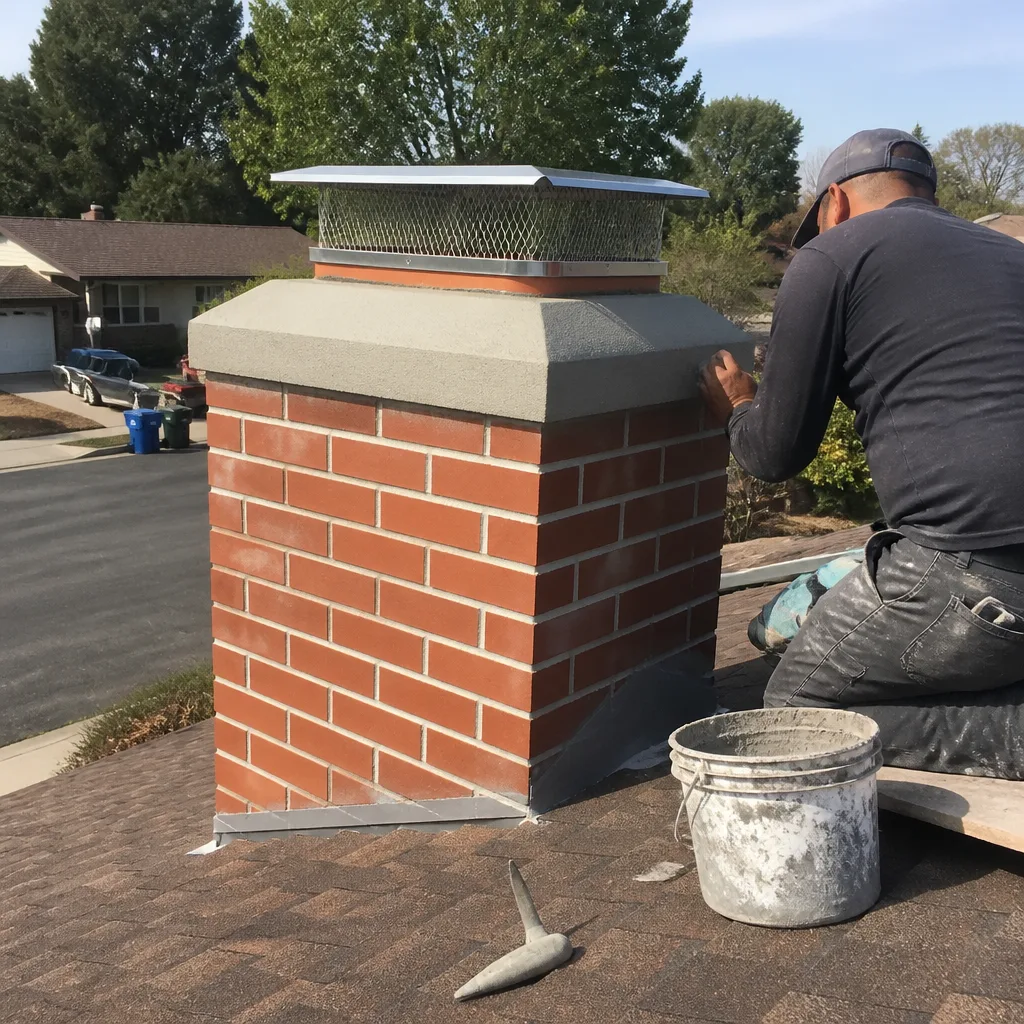
See the difference
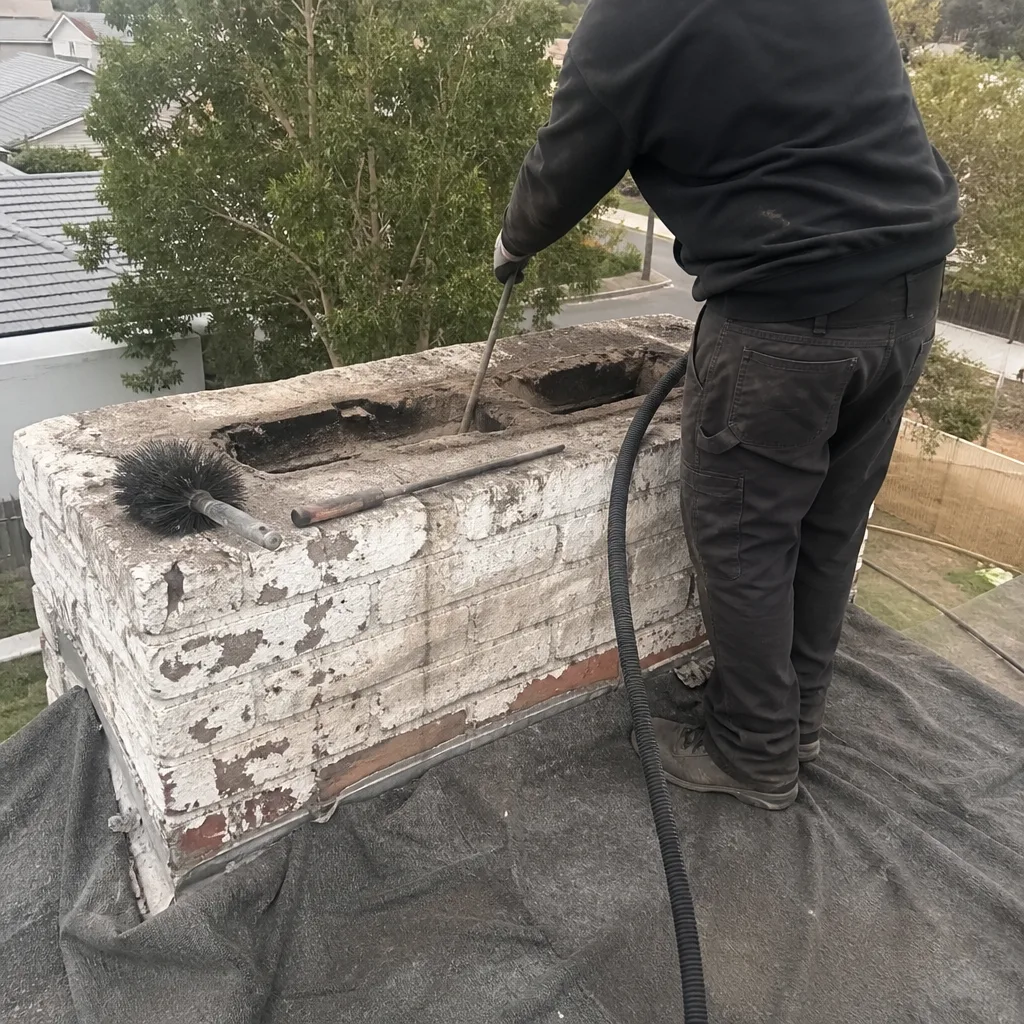 Before
 After
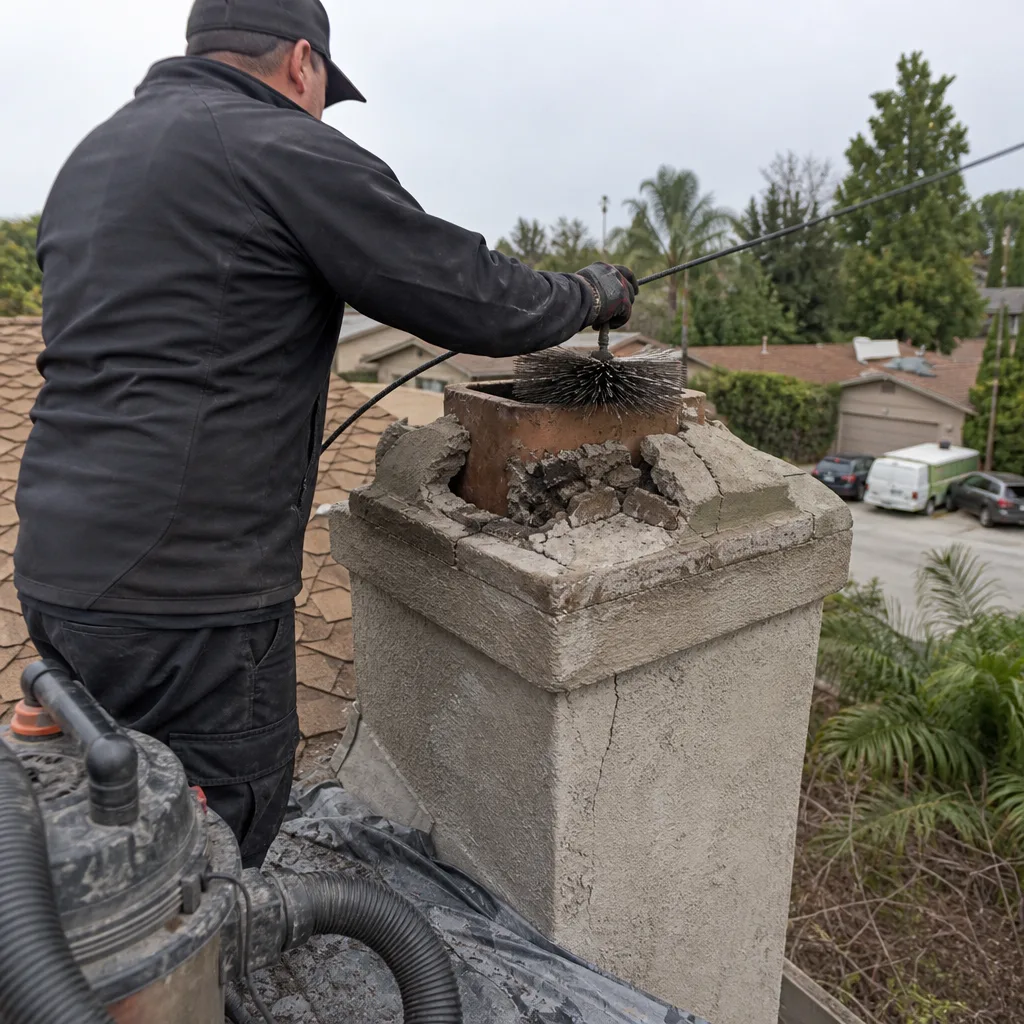 Before
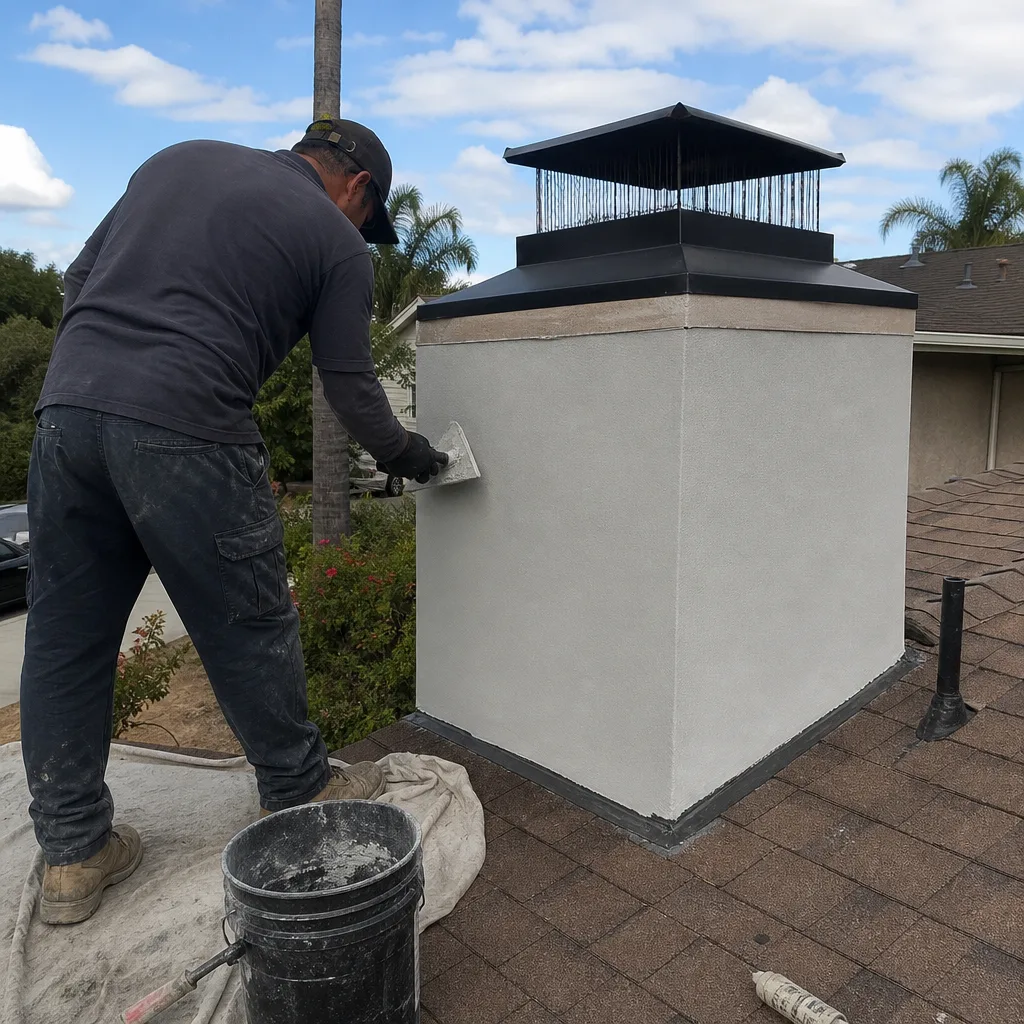 After
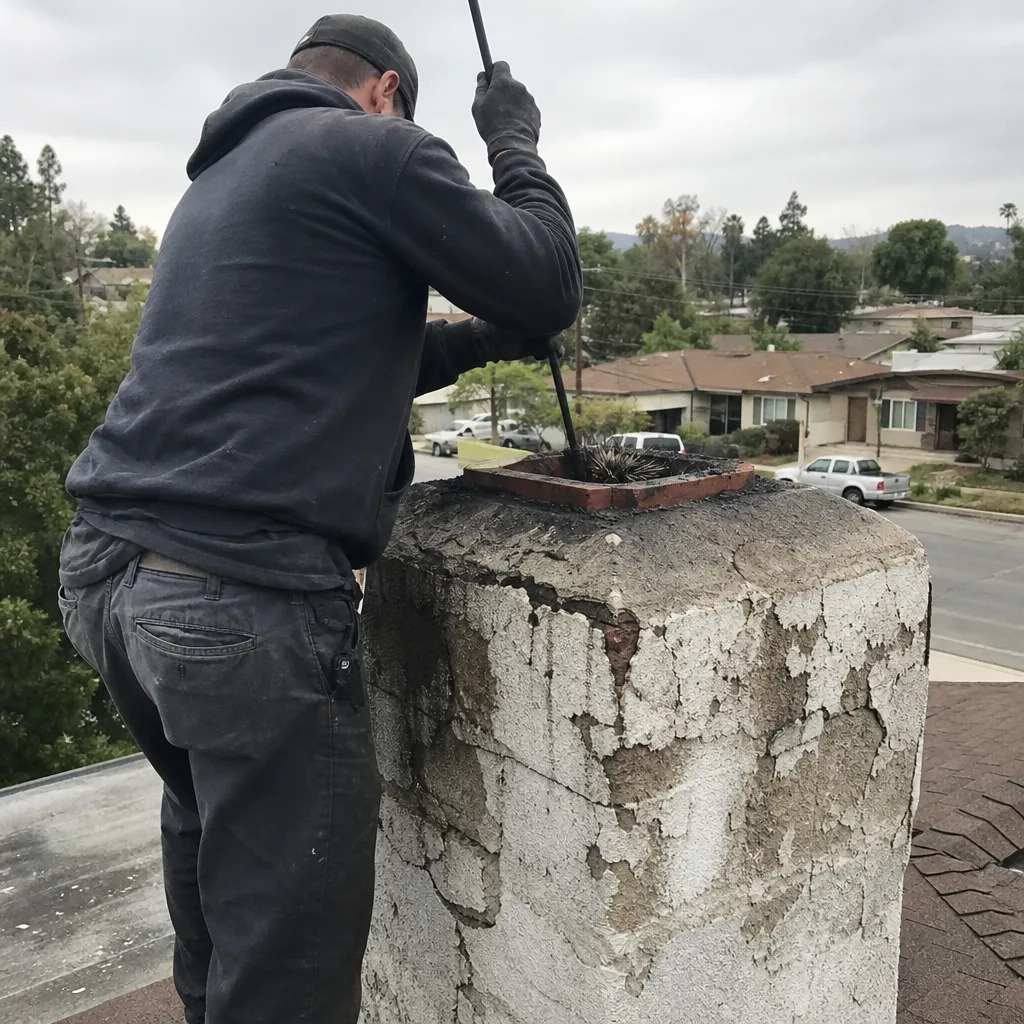 Before
 After